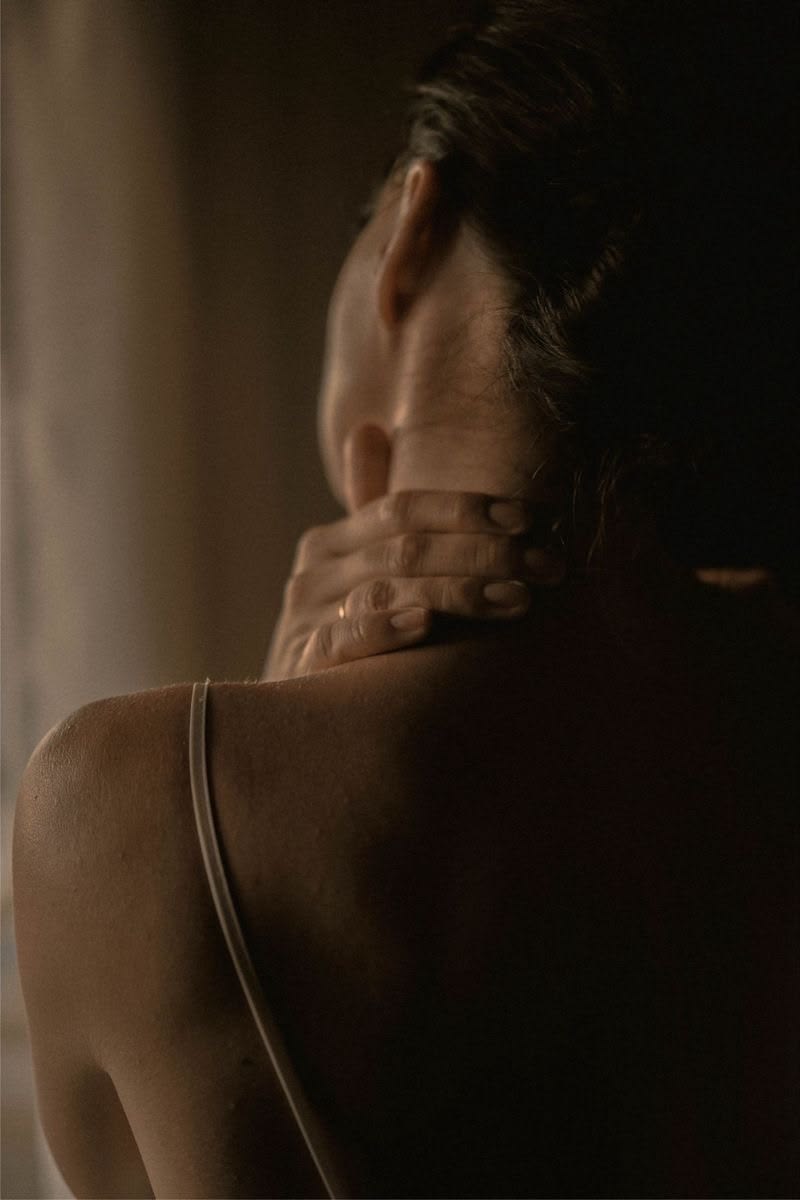
There is a version of the conversation about physical wellness in hospitality that goes like this: eat better, stretch more, wear good shoes, take care of yourself. It is not wrong, exactly. But it misses almost everything that matters.
Hospitality workers have among the highest rates of musculoskeletal injury of any industry. Hotel housekeepers, restaurant servers, line cooks, and banquet staff routinely perform physical labor that would qualify as strenuous in almost any other context — and they do it for eight, ten, sometimes twelve hours at a stretch, often without adequate breaks, often in environments not designed with their bodies in mind. The result is not a wellness problem. It is a structural one.
Understanding that distinction is the starting point for changing anything.
The Data Nobody Talks About
The Bureau of Labor Statistics consistently places hotels, restaurants, and food service among the industries with the highest rates of occupational injury and illness. Musculoskeletal disorders — injuries to muscles, tendons, ligaments, nerves, and joints caused or aggravated by work — account for a disproportionate share of those numbers.
Hotel housekeepers, in particular, have been the subject of repeated ergonomic research. Studies have found that the job involves hundreds of awkward postures and forceful exertions per shift — making beds, pushing heavy linen carts, scrubbing bathrooms in confined spaces, bending and reaching repeatedly across surfaces. The cumulative load is significant. One widely cited study found that more than half of housekeepers reported musculoskeletal pain severe enough to limit their daily activities.
Restaurant workers face a different but overlapping set of risks. Servers carry asymmetric loads (one tray, one arm, thousands of steps per shift), stand on hard surfaces for hours, and work in environments where rushing is the norm and slowing down feels professionally risky. Kitchen staff add repetitive cutting and stirring motions, extreme temperatures, slippery floors, and the particular ergonomic challenges of working at surfaces rarely designed for their height.
These are not rare or edge-case injuries. They are predictable outcomes of predictable working conditions.
The Invisible Strains: What Accumulates Over Time
The injuries that make headlines — a fall, a burn, an acute lift-related back strain — are not actually the most common problem. The more pervasive issue is cumulative strain: the slow accumulation of micro-damage to soft tissue that happens when the same joints and muscles are loaded in the same ways, day after day, without adequate recovery.
Cumulative strain does not announce itself. It builds quietly. A housekeeper does not injure her shoulder making a bed. She injures it after making approximately 15,000 beds in the same internally rotated position over six years, and the shoulder finally runs out of capacity to absorb the load. A line cook does not develop carpal tunnel syndrome from one service. He develops it after years of repetitive wrist flexion with no counter-movement and no recovery protocol.
This is why the standard response to musculoskeletal complaints — "rest it and see if it improves" — often fails. Rest addresses the symptom. It does not address the loading pattern that caused it, and workers return to exactly the same conditions that produced the injury in the first place.
A Role-by-Role Look at the Risk
The physical demands of hospitality are not uniform. Each role carries its own specific pattern of risk:
Housekeeping
The highest overall injury rate in the industry. Primary risks include lower back loading from bed-making and linen handling, shoulder strain from reaching and scrubbing, and wrist and hand injuries from repetitive gripping. Pushing heavy carts on uneven surfaces adds lower body and lumbar risk.
Servers and front-of-house staff
Foot and lower leg fatigue from prolonged standing on hard floors. One-sided shoulder loading from tray carrying. Lower back pain from leaning over tables and bussing stations. Wrist strain from carrying loaded trays and bus tubs.
Kitchen and culinary staff
Forearm and wrist overuse from repetitive cutting, stirring, and plating. Lower back strain from working at surfaces that are frequently the wrong height. Shoulder fatigue from repeated overhead reach in storage. Foot and ankle issues from standing on hard tile without adequate footwear.
Front desk and guest services
Cervical (neck) strain from prolonged screen use and forward head posture. Upper trapezius and shoulder tension from phone use, particularly in staff who cradle handsets between ear and shoulder. Lower back discomfort from standing at counters not ergonomically adjusted to their height.
Why "Just Take Breaks" Misses the Point
The standard wellness advice dispensed to hospitality workers tends to focus on individual behavior: stretch, hydrate, take breaks, lift properly, wear supportive shoes. This advice is not useless. But it places the entire burden of a structural problem on individual workers, and it ignores the conditions under which those workers actually operate.
A housekeeper is not failing to "lift properly" because she lacks information. She is lifting awkwardly because she is working in a bathroom the size of a closet, on a schedule that requires her to complete a room every 25 minutes, with a body that has been doing this for a decade. A server is not neglecting to "wear good shoes" as a lifestyle choice. She is wearing the shoes her employer approved for the uniform, purchased out of her own pocket, on a budget that does not allow for premium footwear.
Effective physical wellness in hospitality requires acknowledgment of this reality. It means looking at workload design, scheduling, equipment, workspace ergonomics, and the cultural norms around reporting pain or asking for help — not just handing workers a stretching guide and calling it a wellness program.
What Proactive Prevention Actually Looks Like
The good news is that musculoskeletal injury in hospitality is not inevitable. Operations that have meaningfully reduced injury rates share a few consistent characteristics.
They treat ergonomics as an operational issue, not a wellness afterthought.
Room assignments are rotated to vary physical demands. Carts and equipment are maintained so they roll and function properly. Workstation heights are adjusted where possible. These are operational decisions, not wellness programs.
They build movement variety into the workday.
The body tolerates load far better when that load is varied. Scheduling strategies that rotate tasks — rather than having the same person make beds for four hours straight — reduce cumulative strain dramatically.
They create genuine psychological safety around reporting pain.
In many hospitality environments, reporting physical discomfort is implicitly discouraged — it reads as weakness, or as an unwillingness to do the job. Operations that have reduced injury rates actively work against this norm, making it clear that early reporting is expected and valued.
They pair individual tools with structural support.
Stretching guides, ergonomic tutorials, and movement resets are genuinely useful — but they work best as complements to operational changes, not substitutes for them. Workers who have access to both are better protected than workers who have access to one.
The Bottom Line
Hospitality workers' bodies break down at high rates because hospitality work is physically demanding, often performed in suboptimal conditions, and structured in ways that accumulate strain over time. This is not a mystery, and it is not primarily a failure of individual workers to take better care of themselves.
What changes the outcome is a combination of things: workers who understand their own physical risk patterns and have practical tools to address them; managers who treat ergonomics as an operational responsibility; and operations designed with the understanding that protecting worker bodies is not a cost center — it is how you keep experienced people in the industry.
The rest of this series gets specific. The next piece walks through a practical 10-minute ergonomic reset designed for all hospitality roles — something you can do in a break room, a service corridor, or anywhere you can find 10 minutes. Subsequent pieces cover safe lifting for hospitality-specific scenarios, footwear and shift survival, and how managers can build a culture where physical wellness is taken seriously.
The industry's physical demands are not going away. But the damage they cause is far more preventable than the current injury rates suggest.
Wellness for Hospitality Professionals · Physical Health & Ergonomics · Article 1 of 5
Next in this series: A 10-Minute Ergonomic Reset for Hospitality Workers →